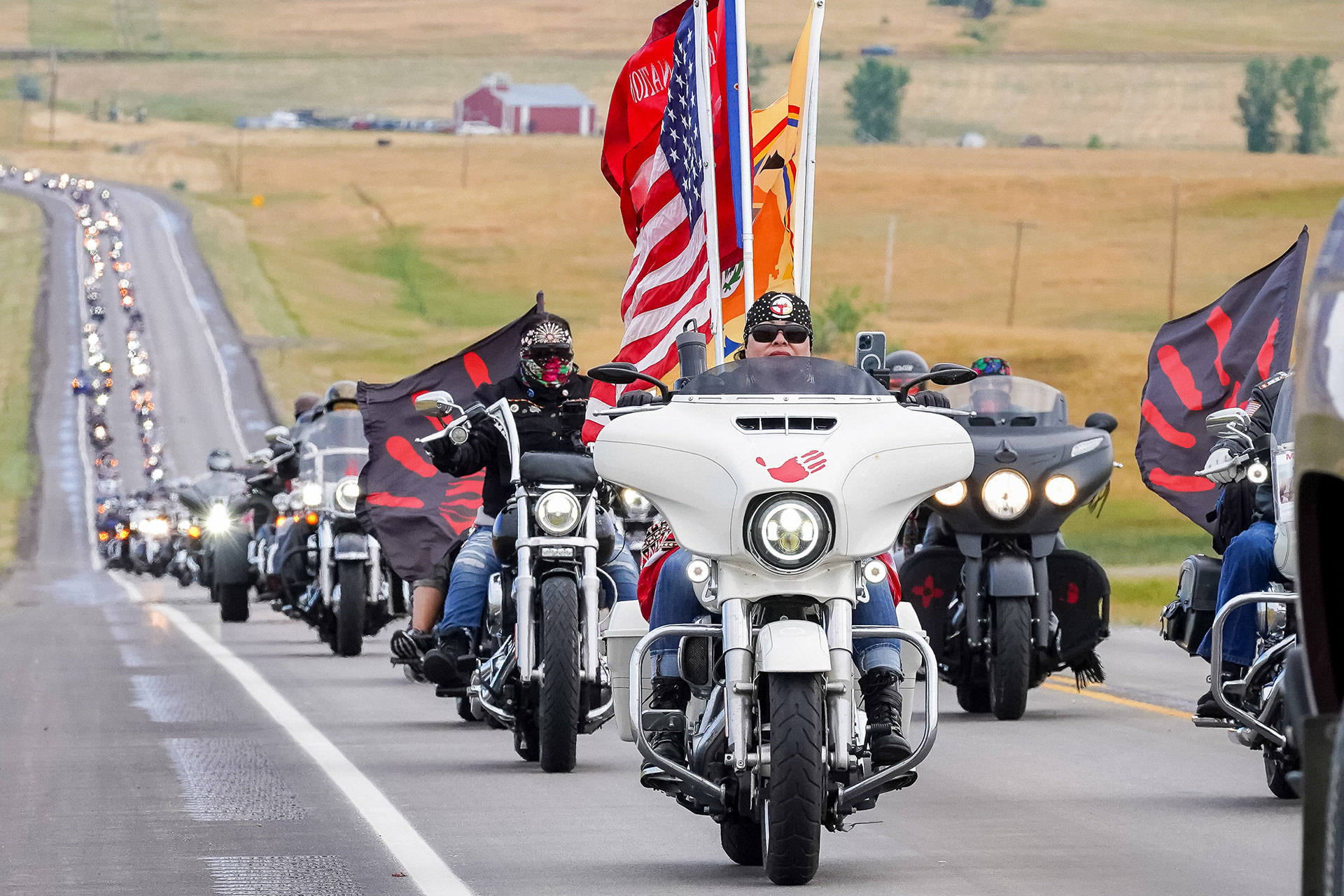
Sunday morning in the sacred land of Bear Butte State Park, the sound of two hundred and fifty motorcycle engines roared through the valley. A line of motorcyclists stretched over half a mile were heading out on a one and a half hour journey to raise awareness for the hidden crisis of Missing and Murdered Indigenous Women. At the front, a small group led one of the main events of the annual Sturgis Motorcycle Rally in South Dakota: the Medicine Wheel Ride.
In 2016, there were 5,712 reports of missing American Indian and Alaska Native women and girls, according to the National Crime Information Center (NCIC). That same year, the US Department of Justice’s federal missing person database only logged 116 cases. This underreporting only contributes to the crisis of missing and murdered Indigenous women and girls (MMIWG).
Racism, colonialism, and a culture of disregard for Indigenous people lead directly to violence against women in the Native community. Indigenous Women are 3 times more likely to be murdered and 1.7 times more likely to experience violence than Anglo-American women. According to the Centers for Disease Control, murder is the 3rd leading cause of death for Indigenous Women.
The “hidden crisis” cannot stay hidden in American society anymore—that’s why the Medicine Wheel Riders set out to raise awareness for the cause, riding through the Black Hills of South Dakota.
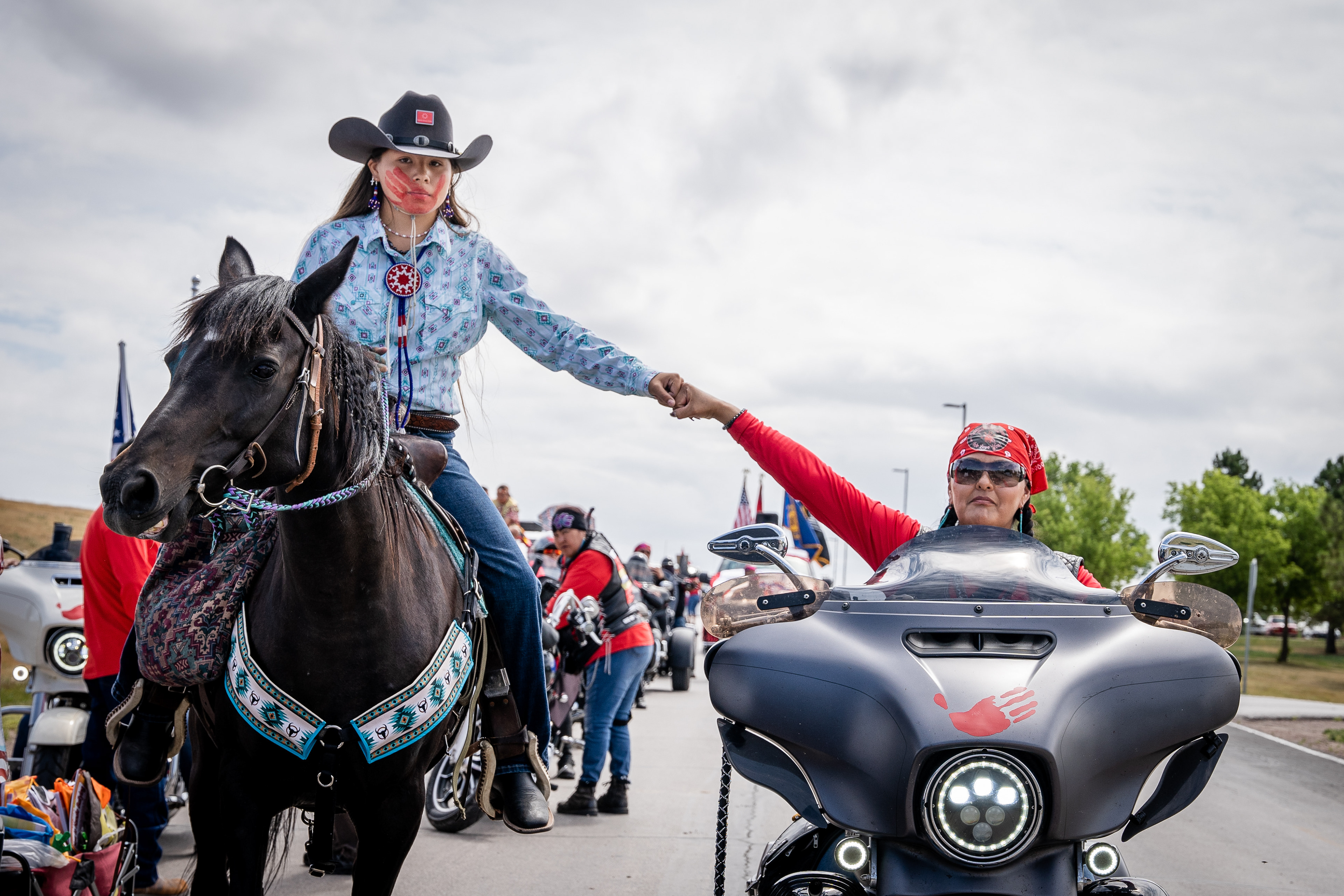
Tarah Weeks of the Medicine Wheel Riders (right) poses for a powerful portrait with a Lakota tribe member (left) before setting out for an awareness ride for Missing and Murdered Indigenous Person on August 6th, 2022. The event lasted over two days during the annual Sturgis Motorcycle Rally in South Dakota.
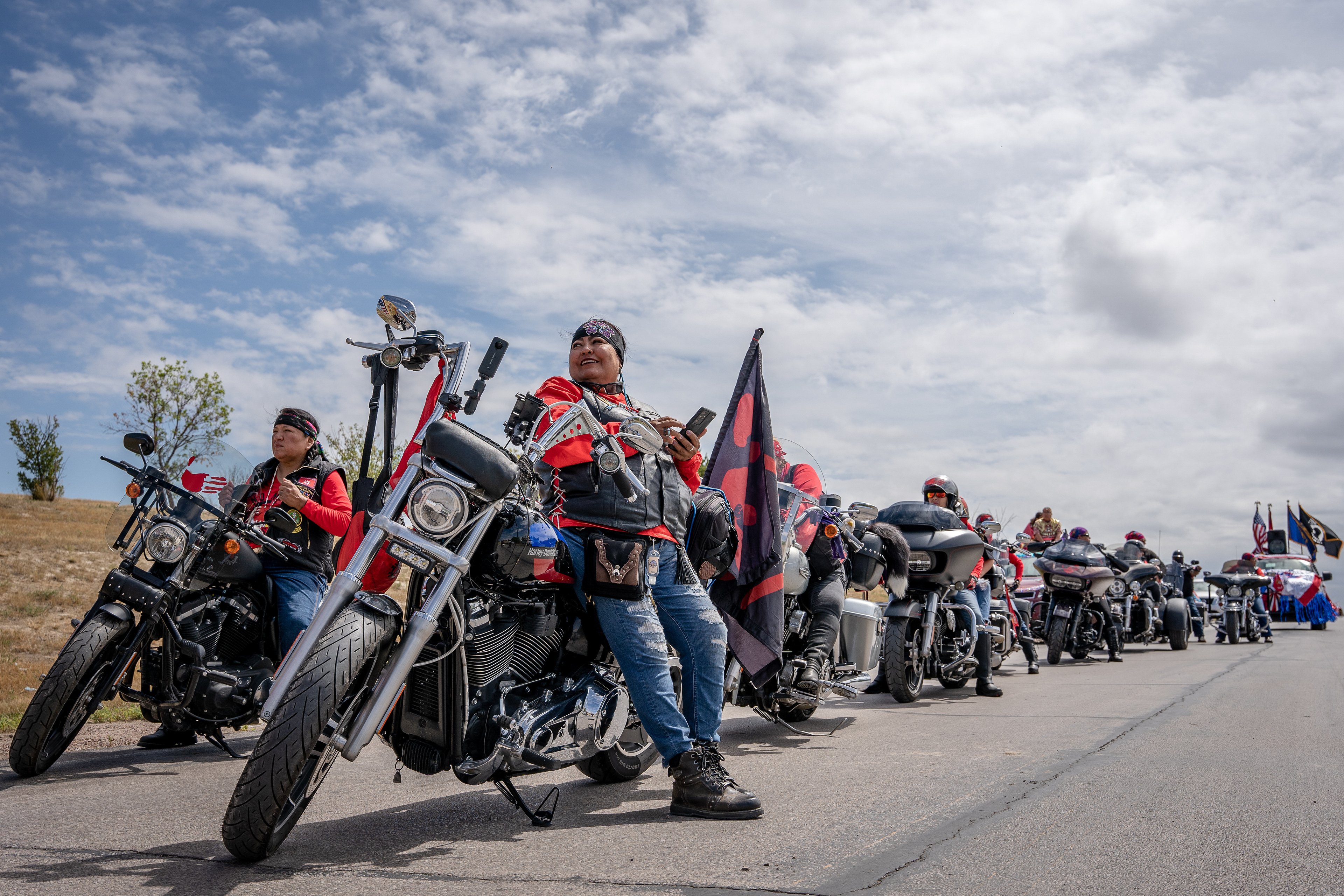
"We are an Indigenous women led with alliance from all nations Motorcyclists who create awareness events and fundraise for issues affecting our native communities especially Missing and Murdered Indigenous Relatives."
Support their cause on Facebook and at www.medicinewheelride.org
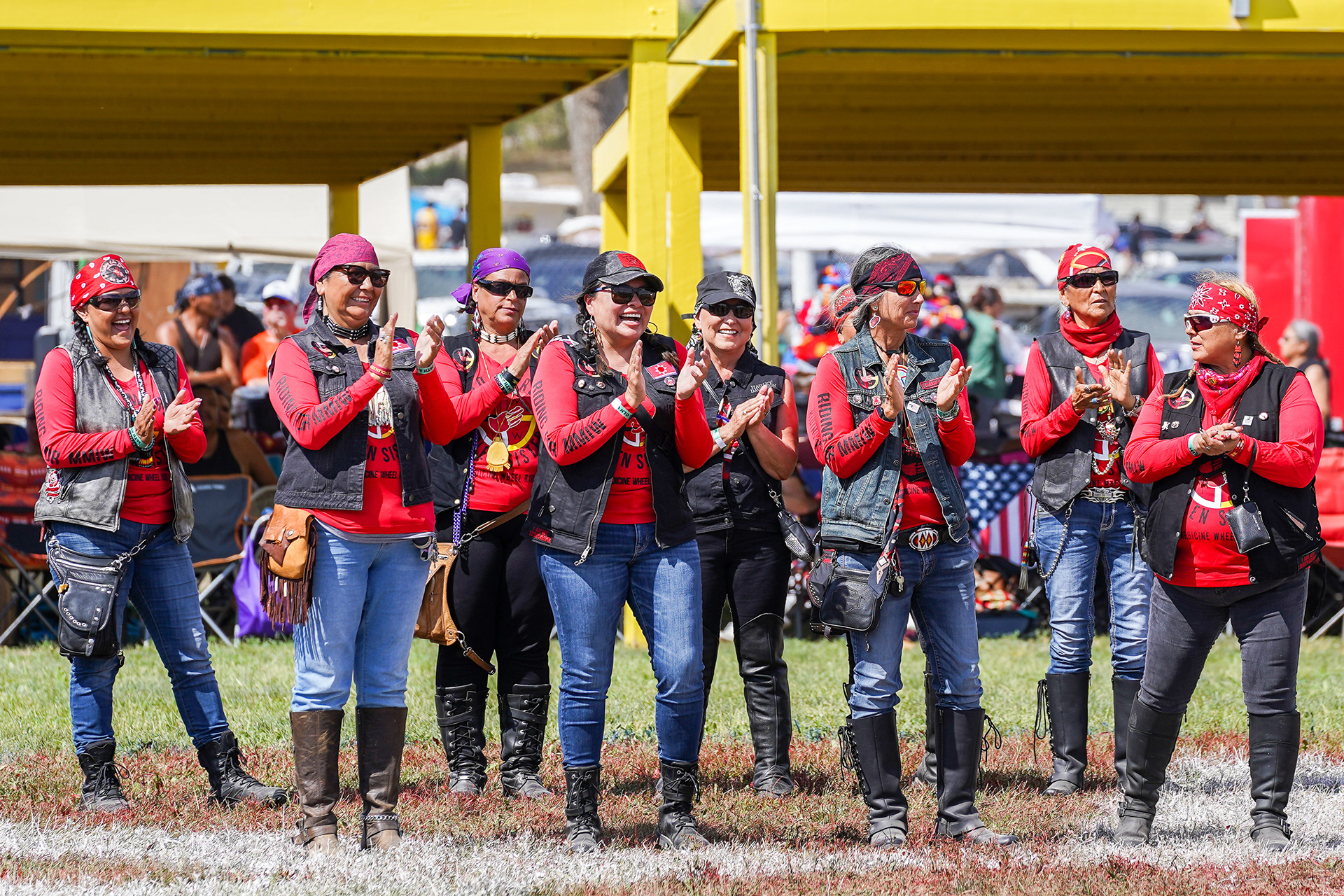
(Above) The Medicine Wheel Riders being introduced by the Oglala Lakota nation during their powwow’s grand entry on August 6th.
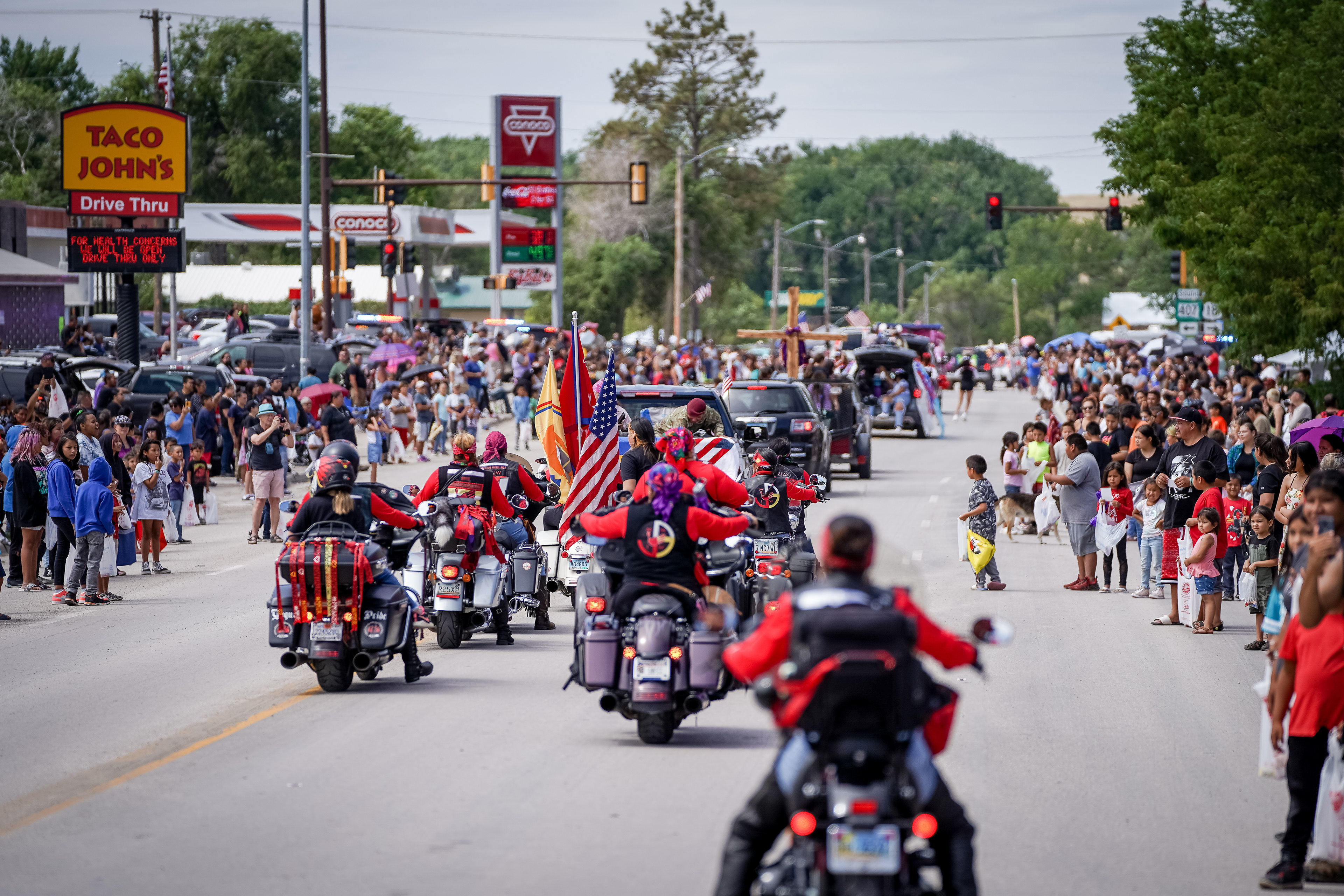
Pine Ridge, South Dakota is the home of the Oglala Lakota nation. The Medicine Wheel Riders were invited to their annual parade and wacipi (powwow). The riders cruised down the streets, proudly wearing the cause they stood for, using their voices to make the hidden crisis known.
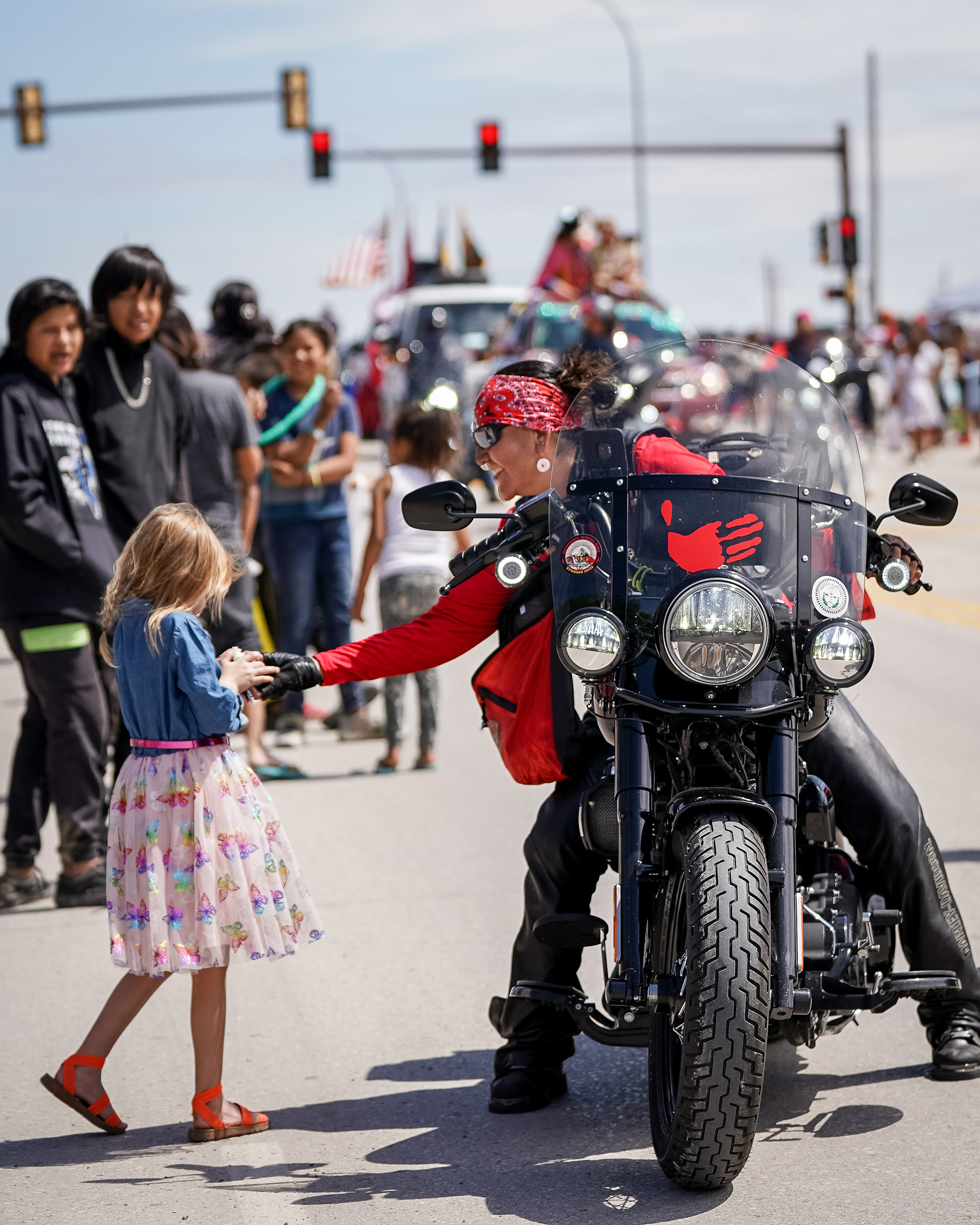
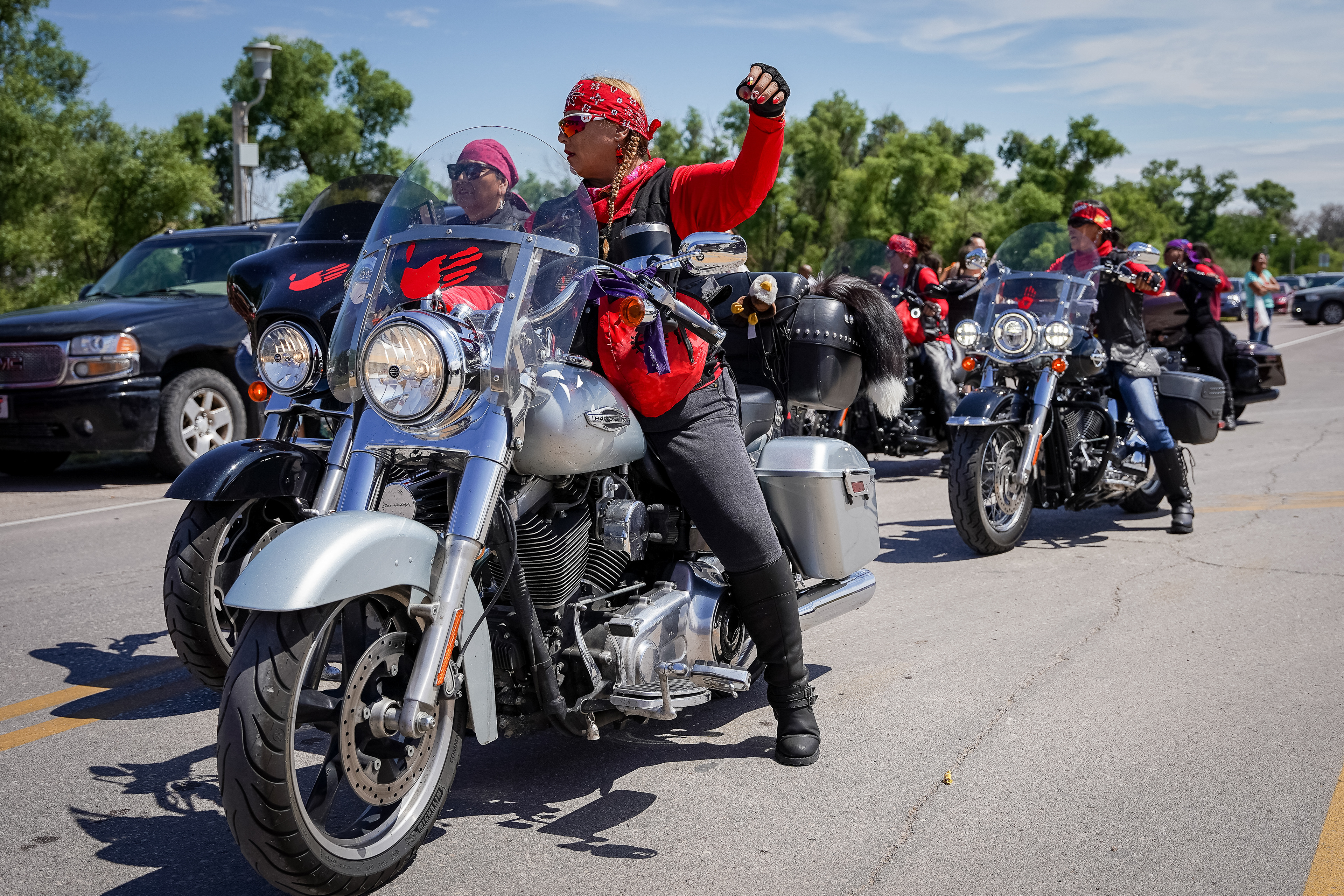
They carry the names of lost relatives with honor, showing the families their support.
"It’s a small way to let the families know, ‘We hear you, we see you, we are here for you as a community of Indigenous biker women. We support you and will ride for your loved ones across Canada, Mexico, Hawaii, and Turtle Island.’" - Lisa Rivera, “Sacred Ryder”
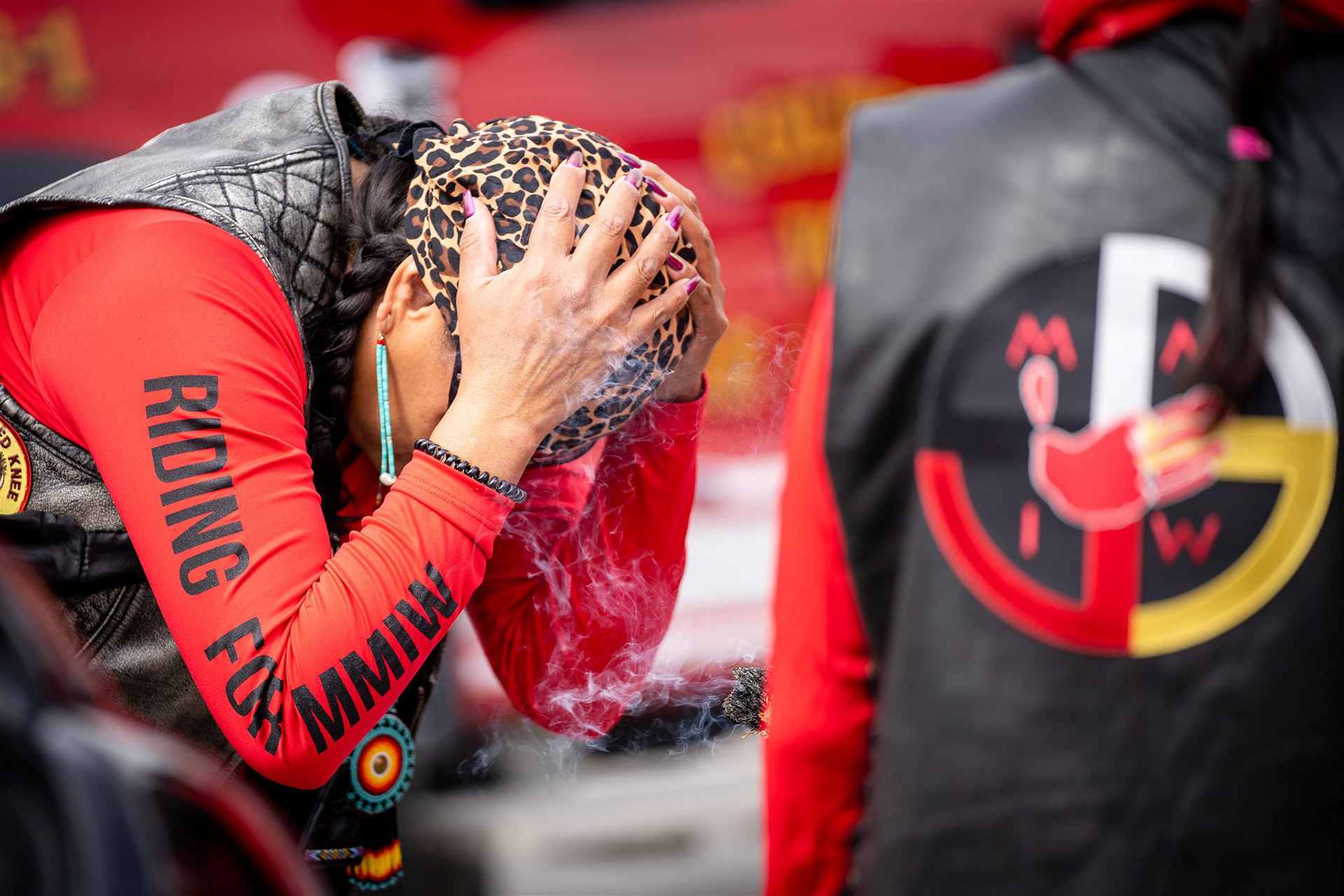
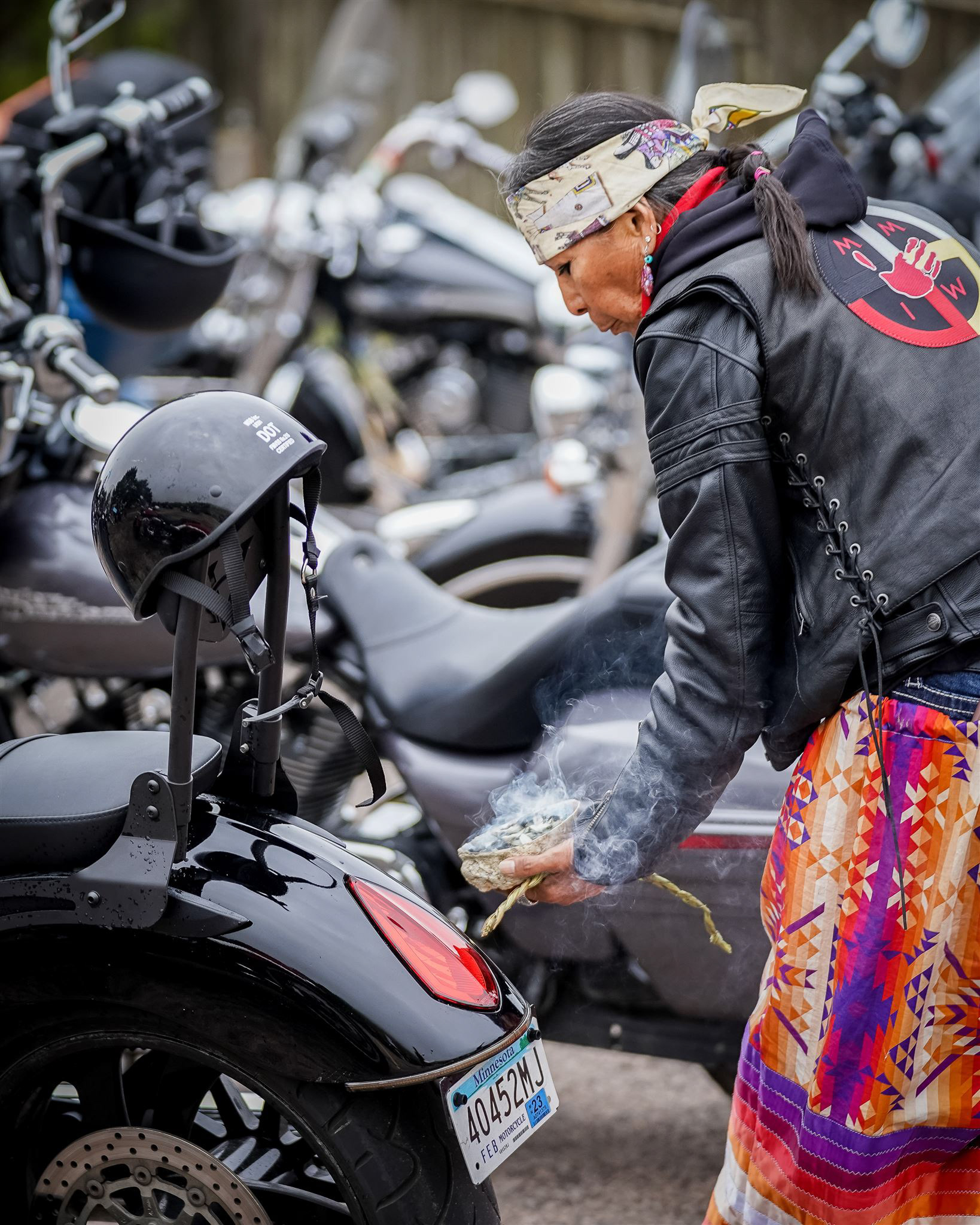
(Above) Riders and their bikes receiving blessings for a safe journey by a ceremony of prayers and the burning smoke from herbs known as smudging.
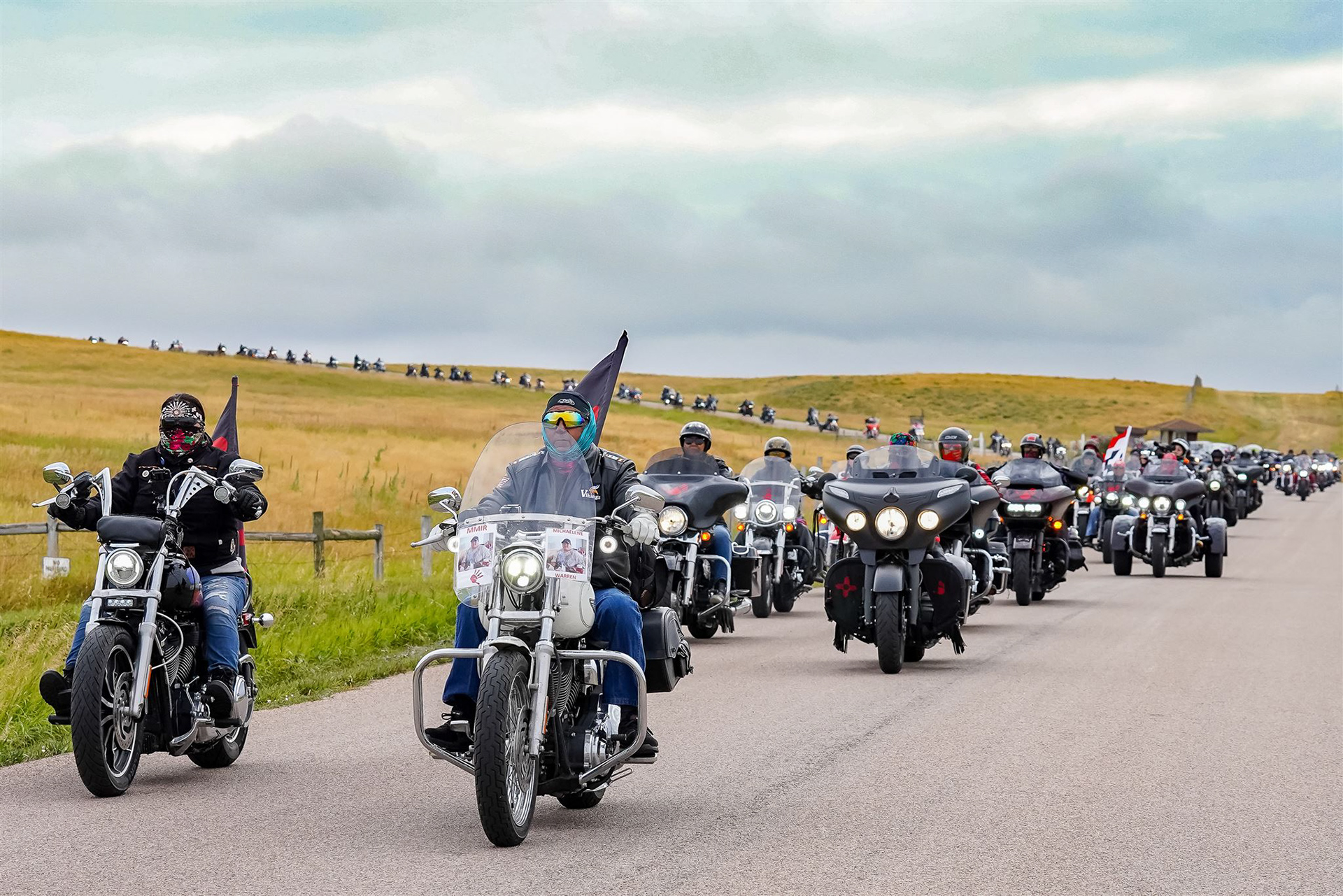
(Above) 250 motorcyclists departing Bear Butte State Park after a short ceremony of remembering and blessing, here marks the beginning of the Medicine Wheel Ride. Bear Butte "The Good Mountain" (Cheyenne), "Bear Mountain" (Sioux) is a sacred site where Native Americans have come to hold ceremonies, gatherings, and send prayers for thousands of years.
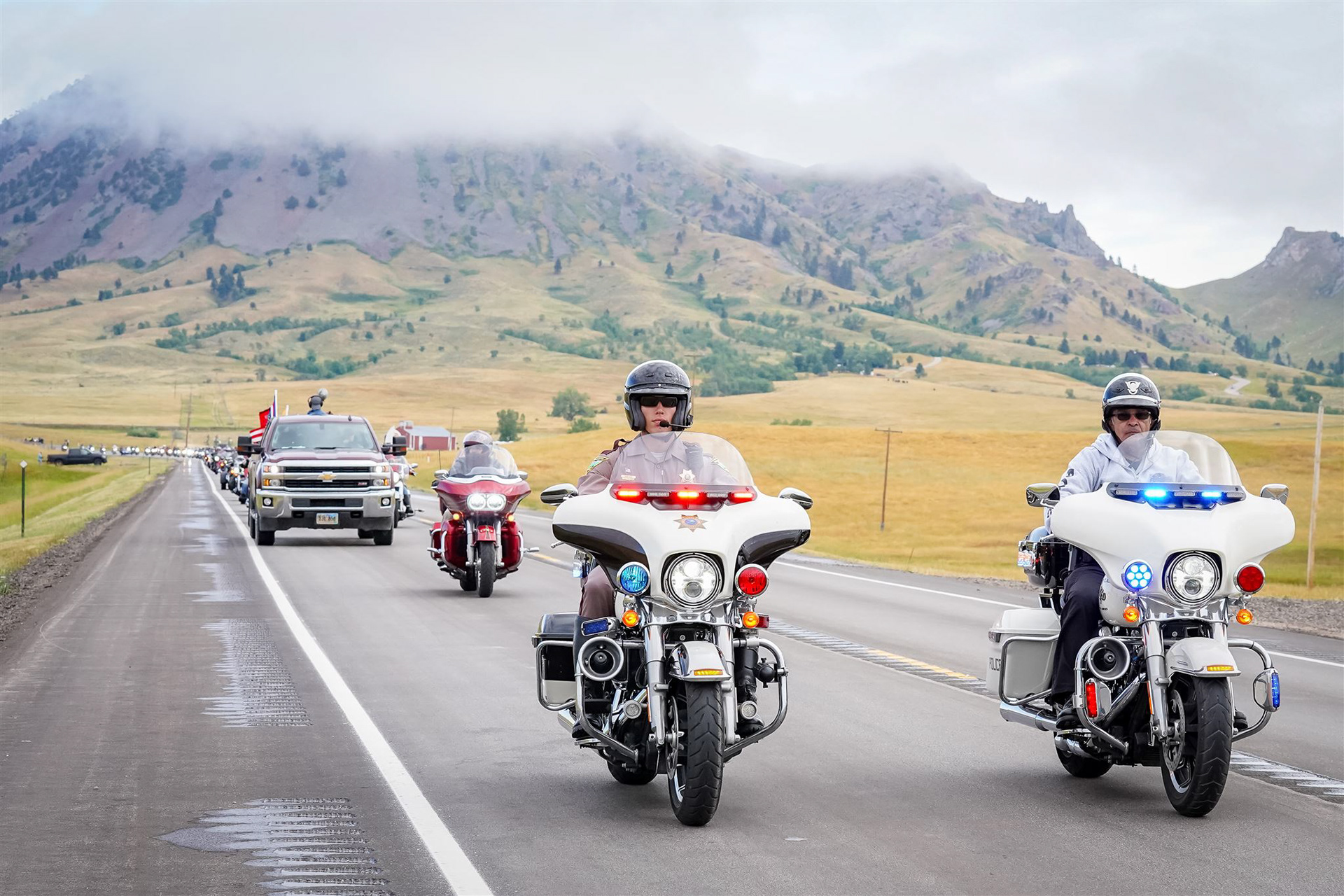
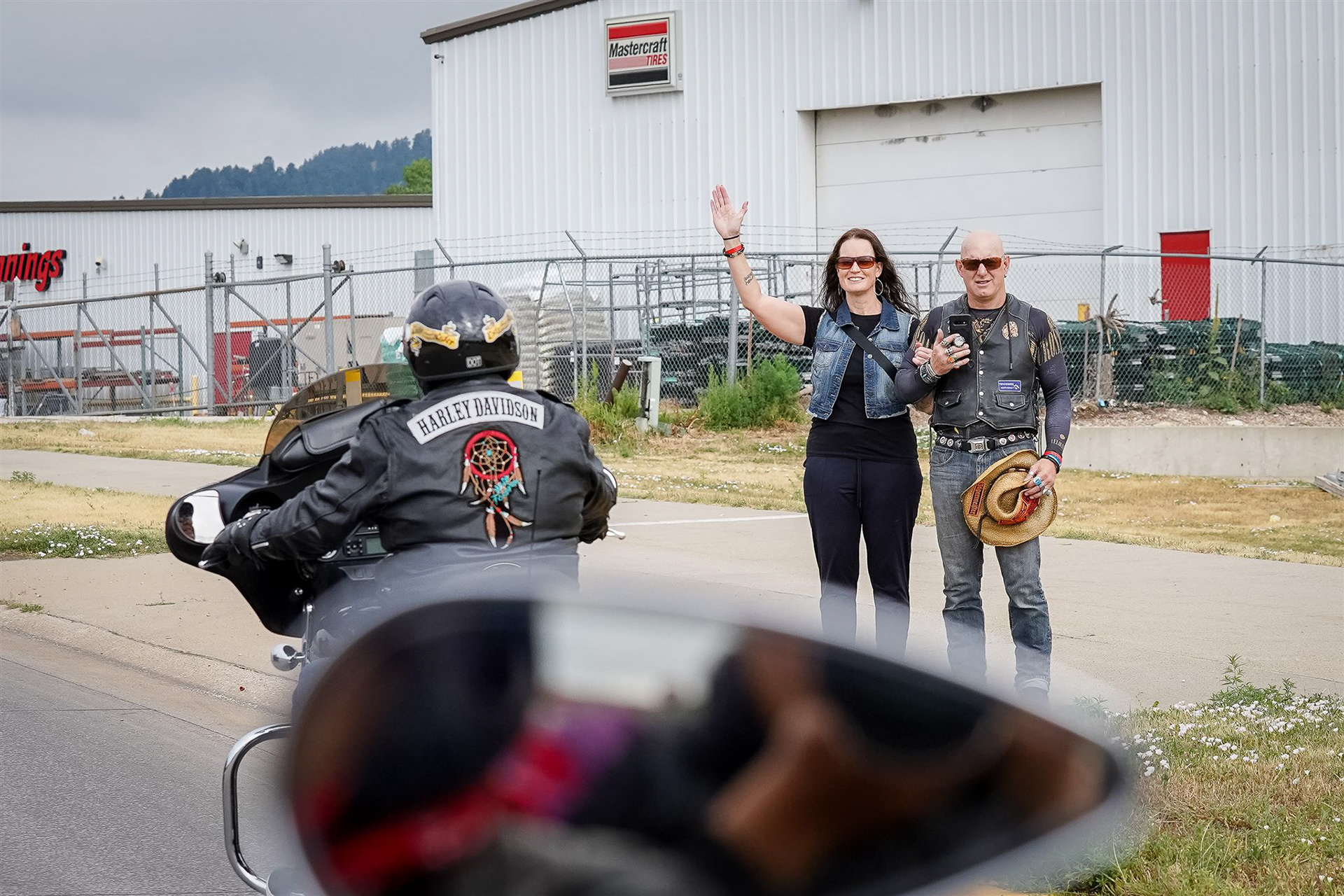
This year’s Medicine Wheel Ride was a 75-mile powerful journey from Bear Butte State Park to Crazy Horse Memorial to bring awareness to the plight and resilience of Indigenous women. With the sheriff’s department’s escort, a group of two hundred and fifty bikers made their way through towns like Sturgis, Deadwood, Lead, and Hill City while carrying their cause through the city streets. People gathered on the sidewalk and watched as the bikers rode by, led by a group of women in red and black, their ribbons and flags waving in the wind.
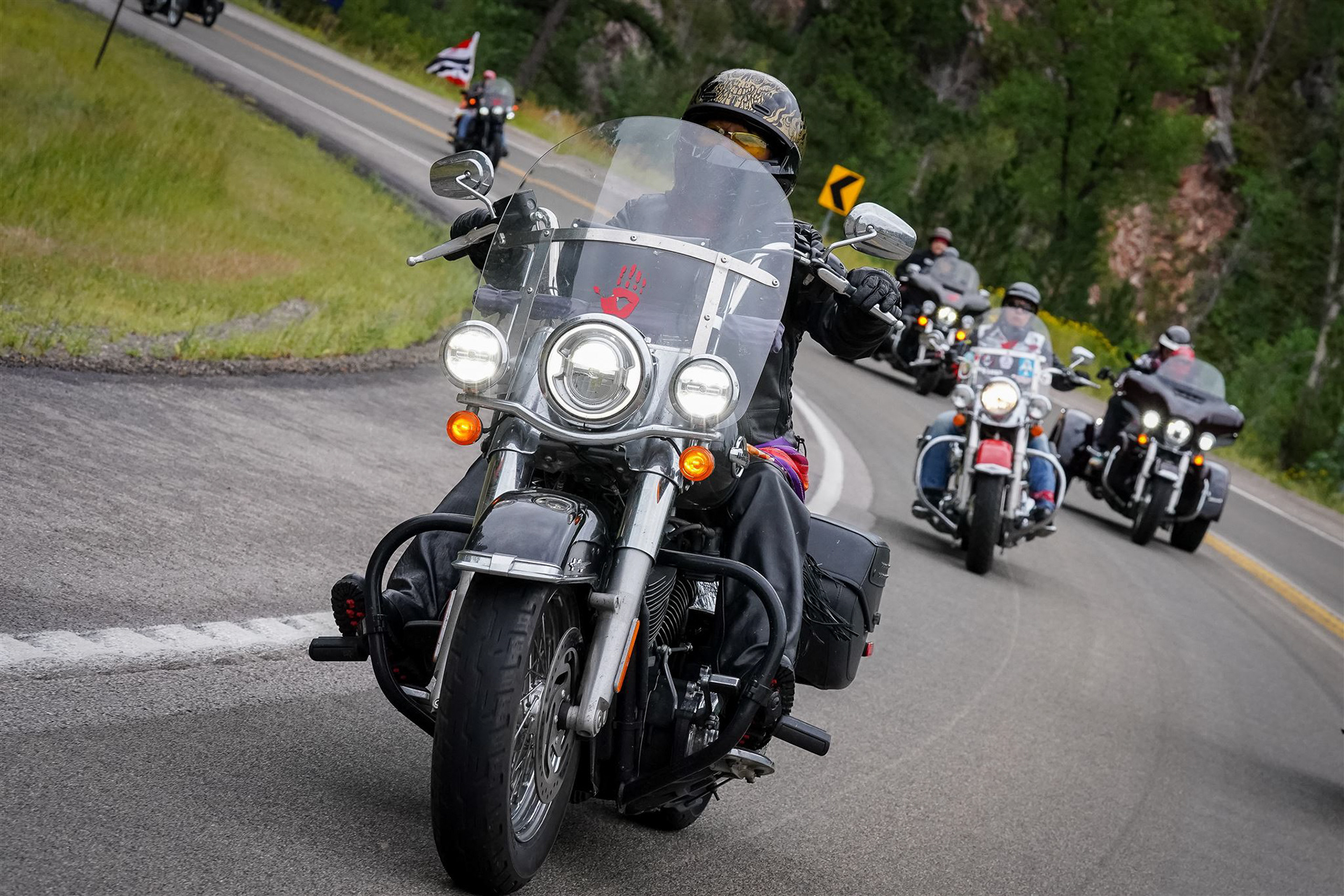
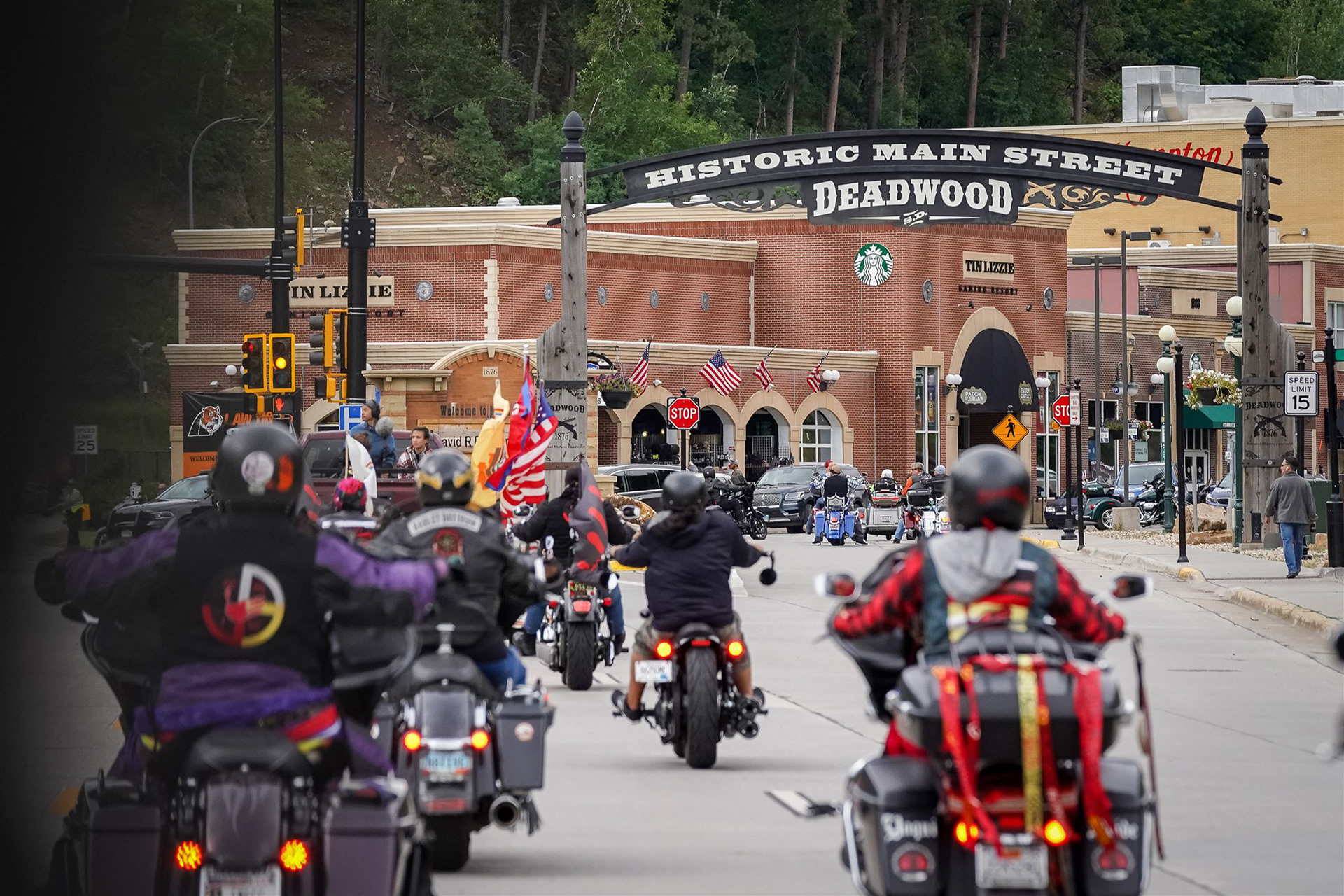
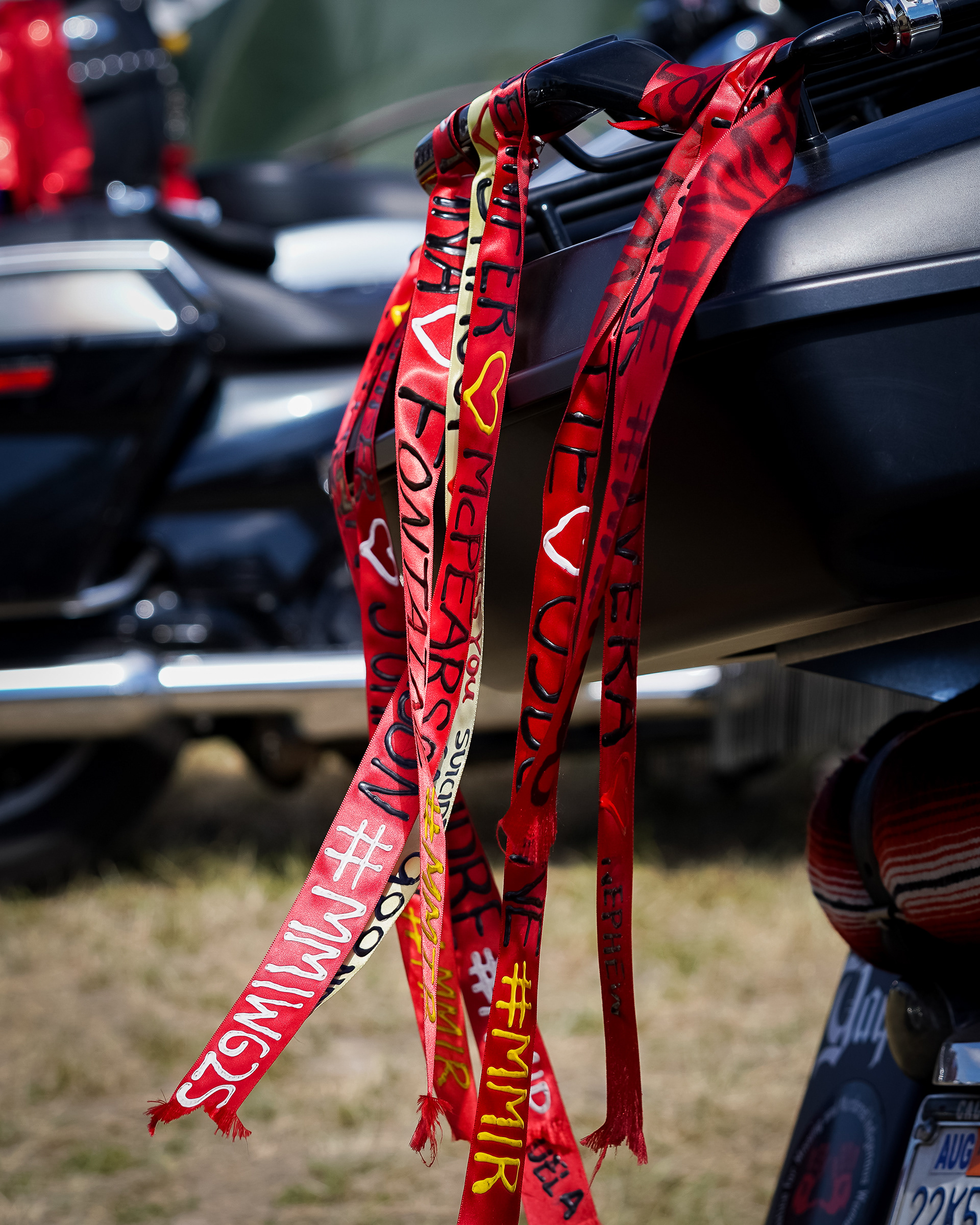
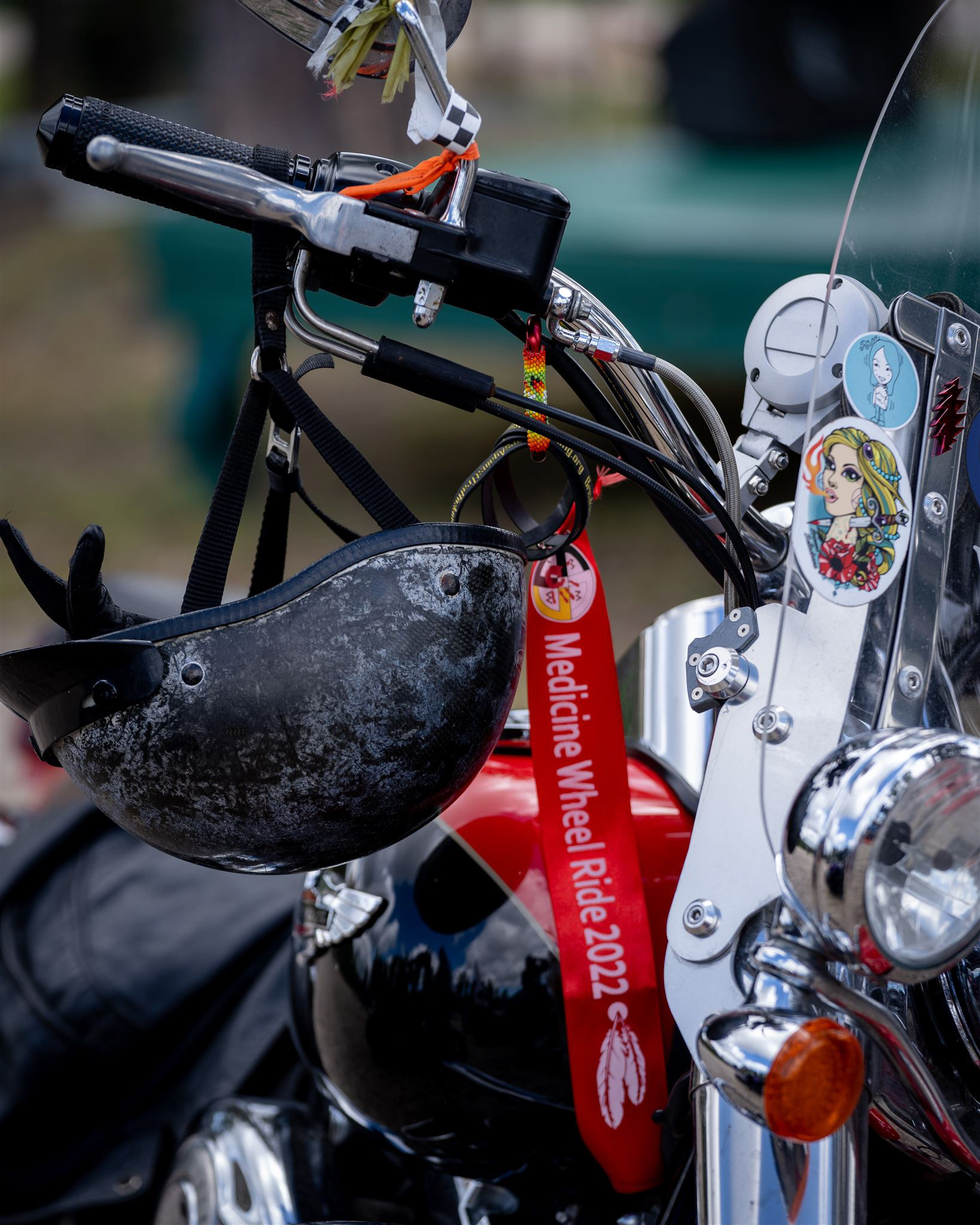
(Above) Ribbons tied to the bike of Lisa Rivera "Sacred Ryder" from the Chichimeca, Yaqui, and Xicana communities. The Medicine Wheel Riders carry the ribbons on their bikes to remember lost family members and relatives. Red ribbons represent the blood shed by the Missing and Murdered Indigenous relatives, purple represents domestic violence which many of the group have experienced, and yellow represents suicide. The bikers carry the names on the ribbons with honor and ride with prayers in hopes that those alive will be reunited with their families and justice will be found for those lost.
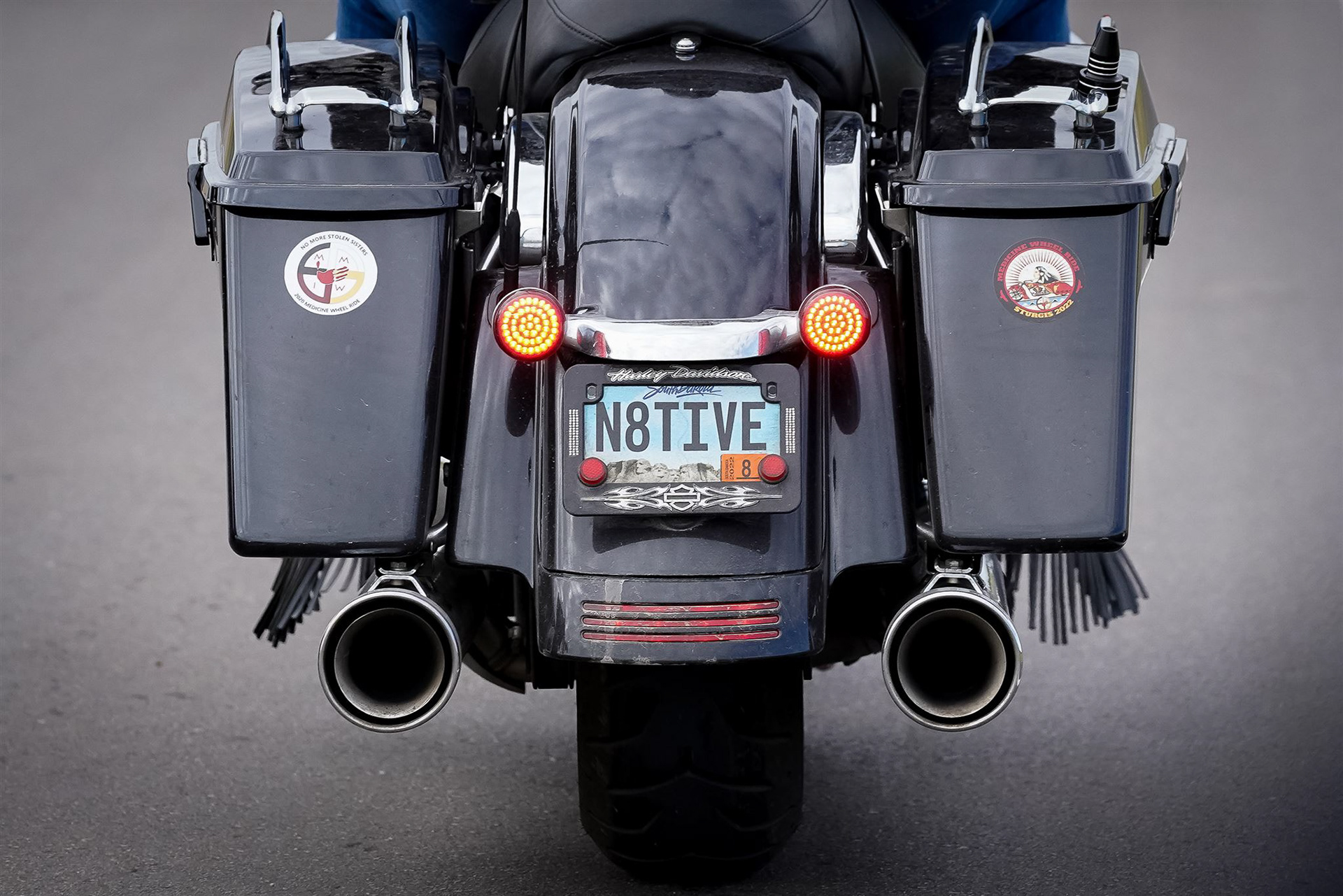
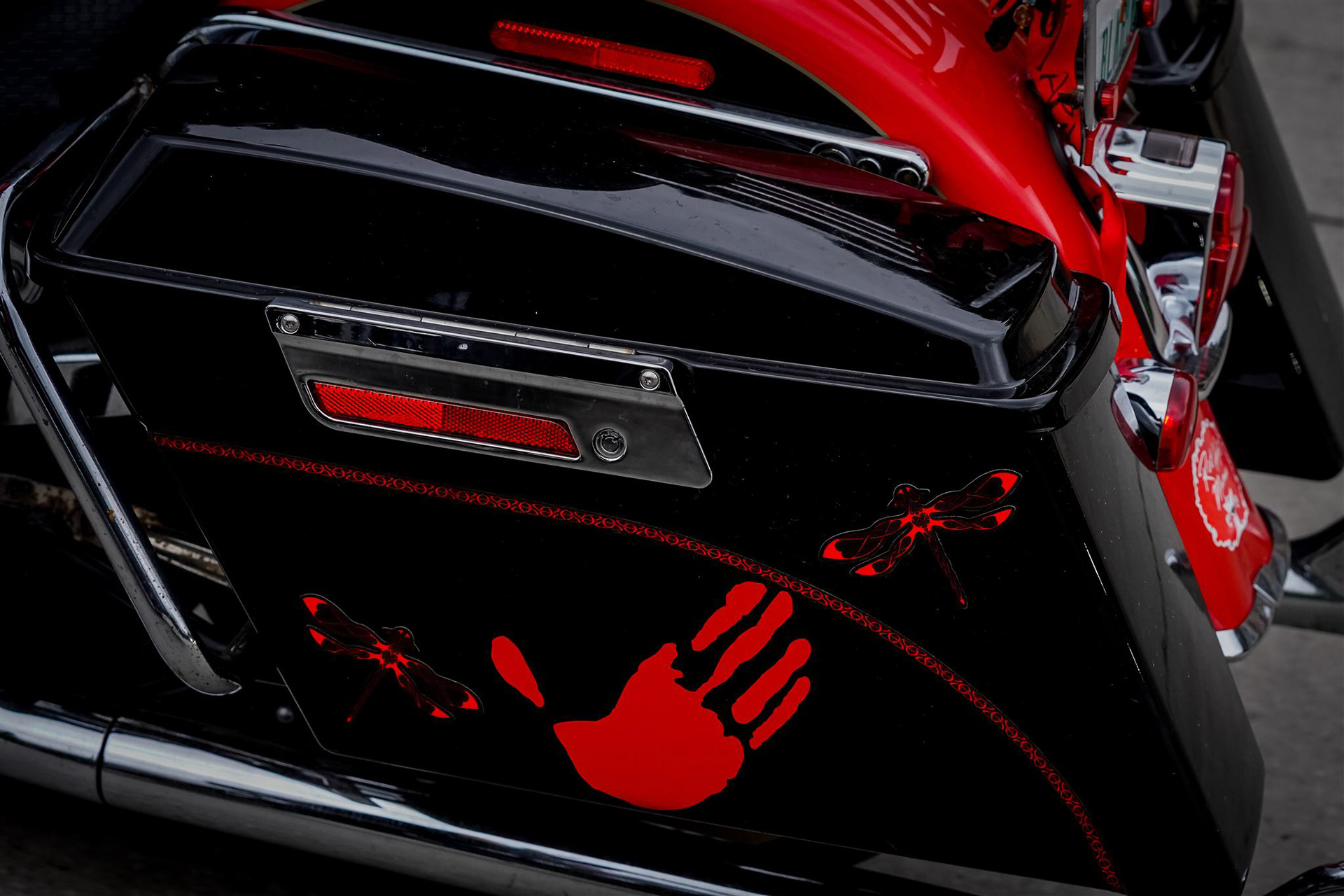
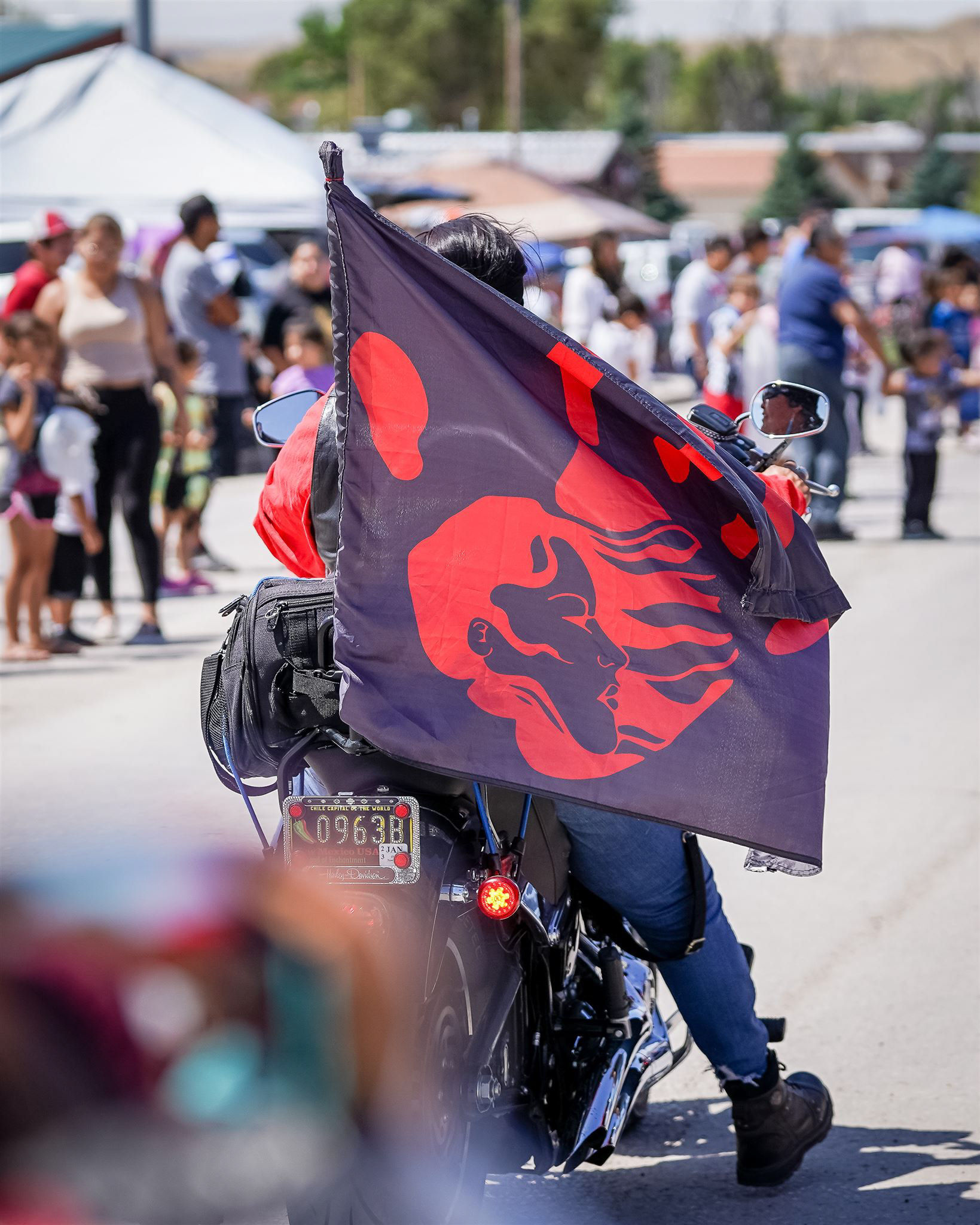
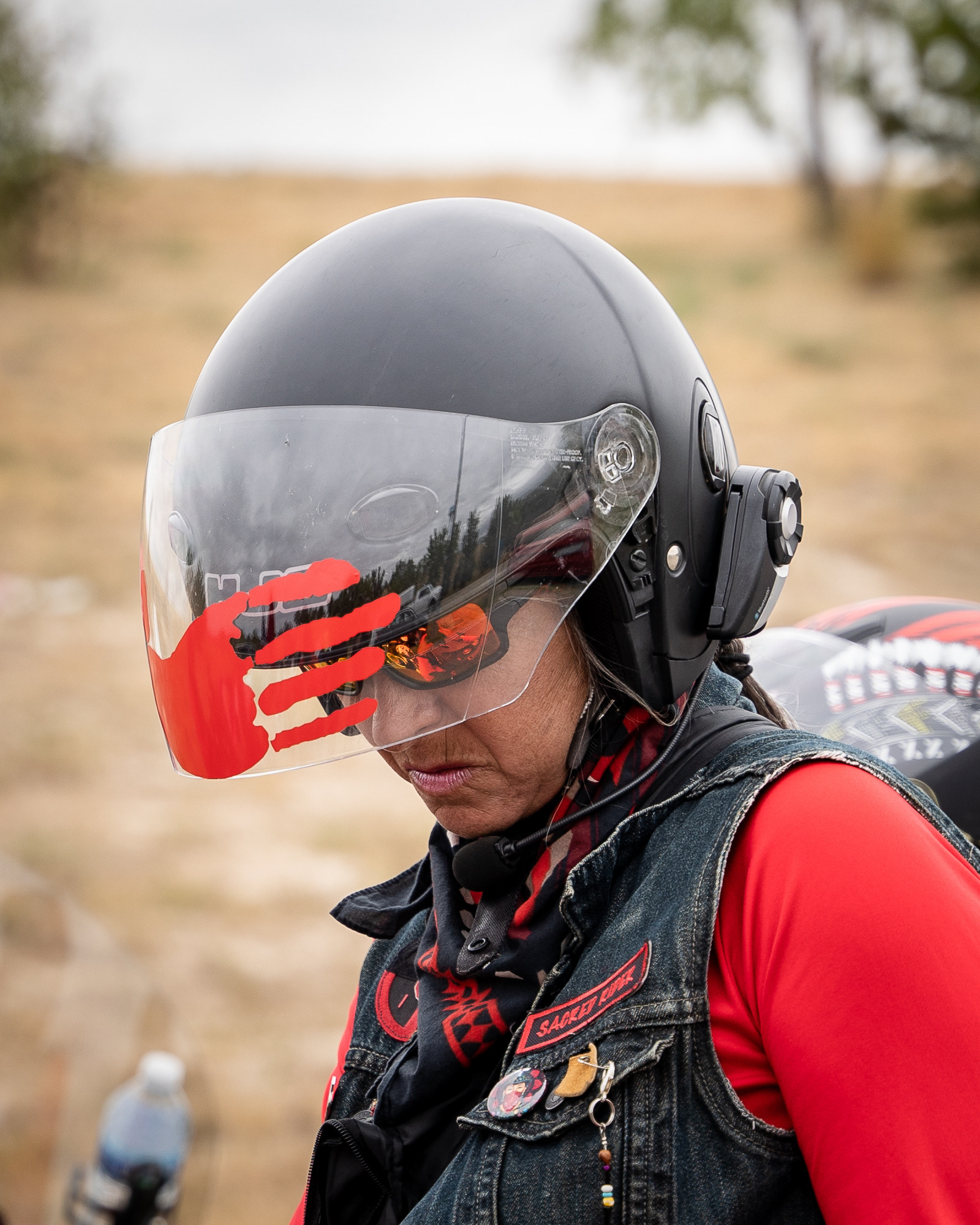
(Above) The red handprint, which represents the silence of victims and their families, has become a powerful symbol for the movement of Missing and Murdered Indigenous Women.
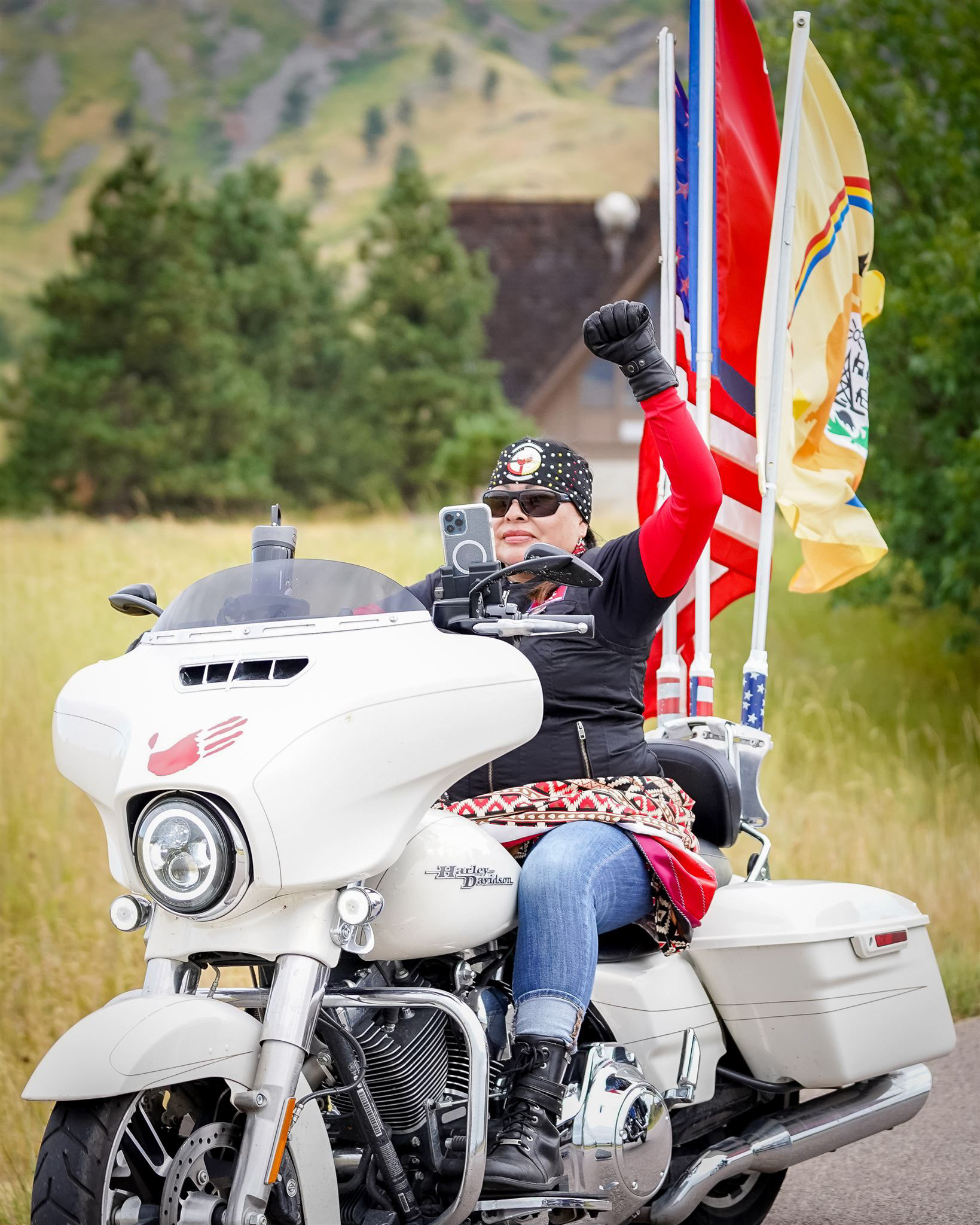
(Above) Lorna Cuny of Oglala Lakota is the leading coordinator for every year's Medicine Wheel Ride, she is also one of the five founders of the Medicine Wheel Riders along with Luvy Yonnie, Lynette Red cloud, Lisa Rivera, Shelly Denny.
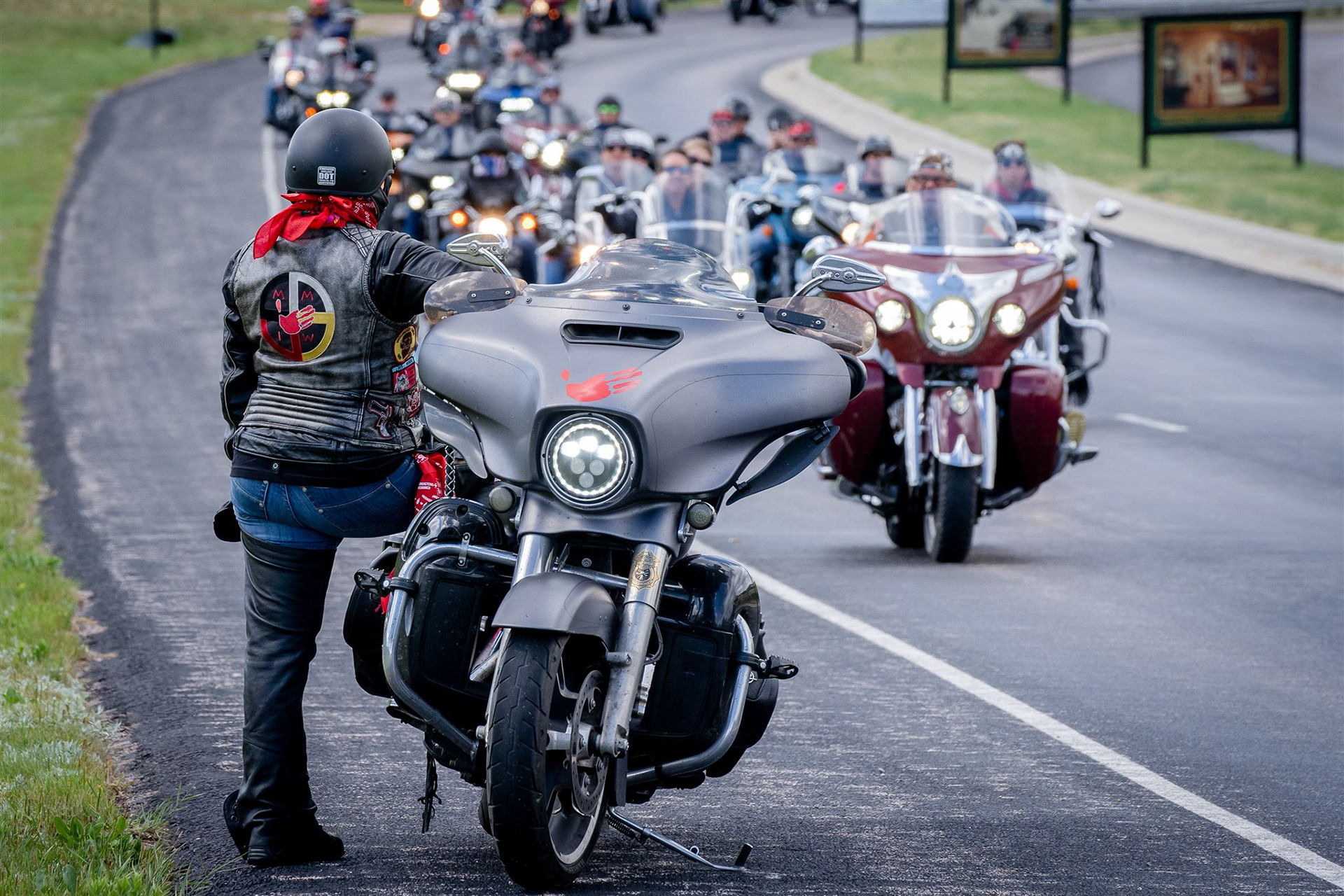
(Above) Tarah Weeks from the Medicine Wheel Riders watches as the bikers ride into Crazy Horse Memorial, the finishing line of their journey on the morning of August 7th.
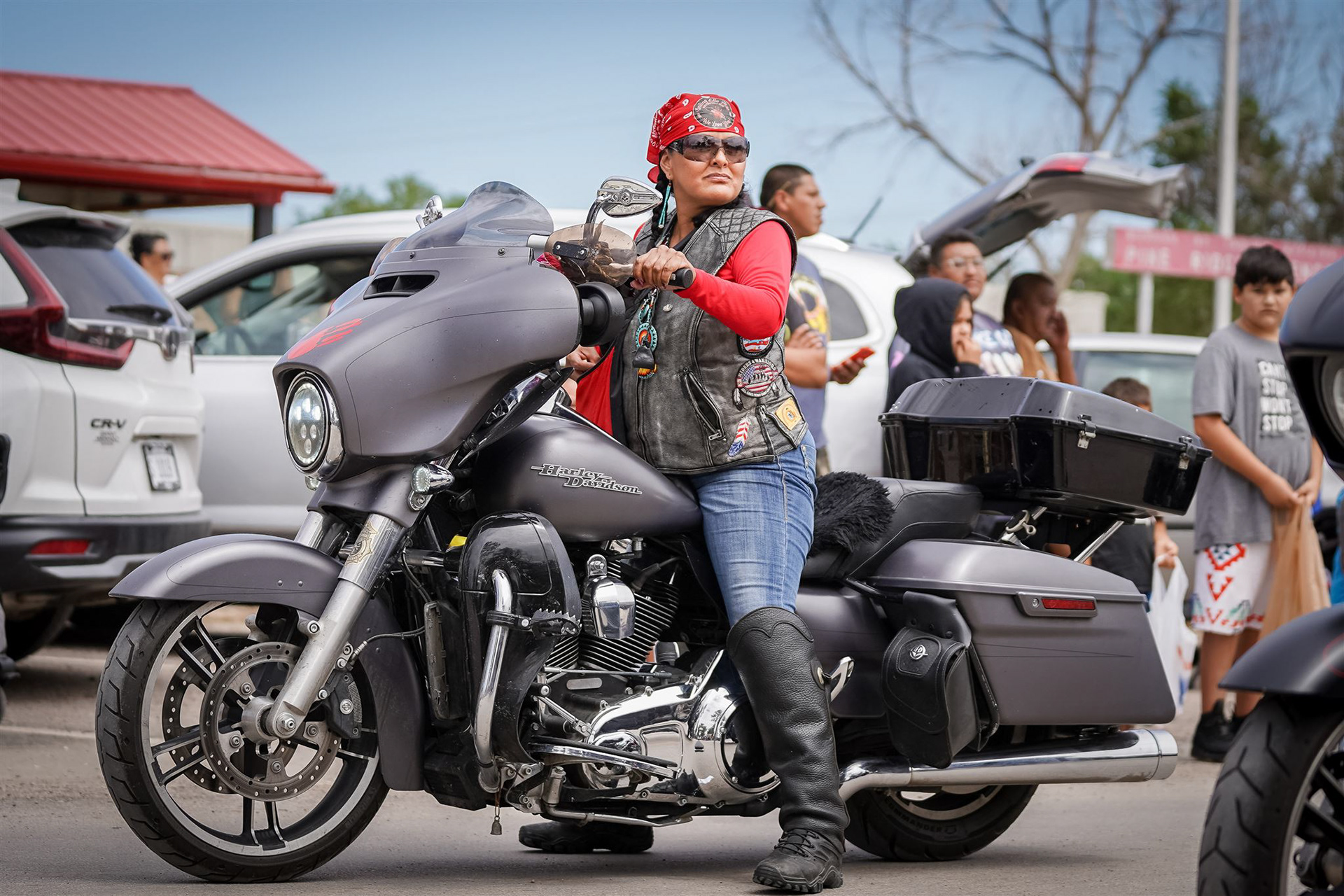
(Above) Tarah Weeks of the Navajo Nation is the owner of the Native Resilience Source (NR Source) program, where she uses resources within the Indigenous community to teach self-defense and provide motivational presentations. It’s all about focusing on, in her words, “Our own people, our own teachings, culture, beliefs, practices." She also partners with Search and Rescue Organizations and provides a truck and trailer for logistical support. She has traveled to Arizona, South Dakota, and Montana for NR Source's cause.
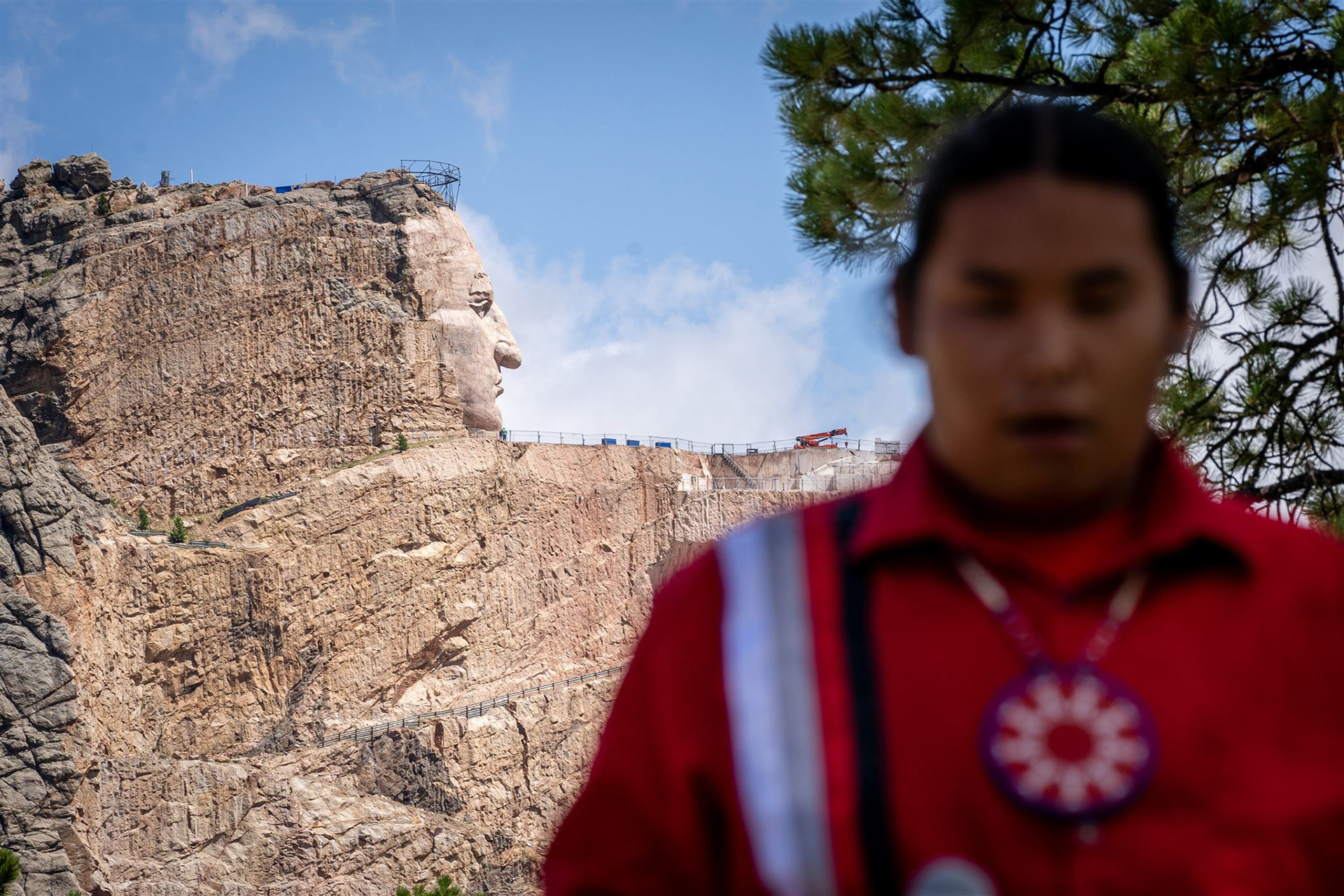
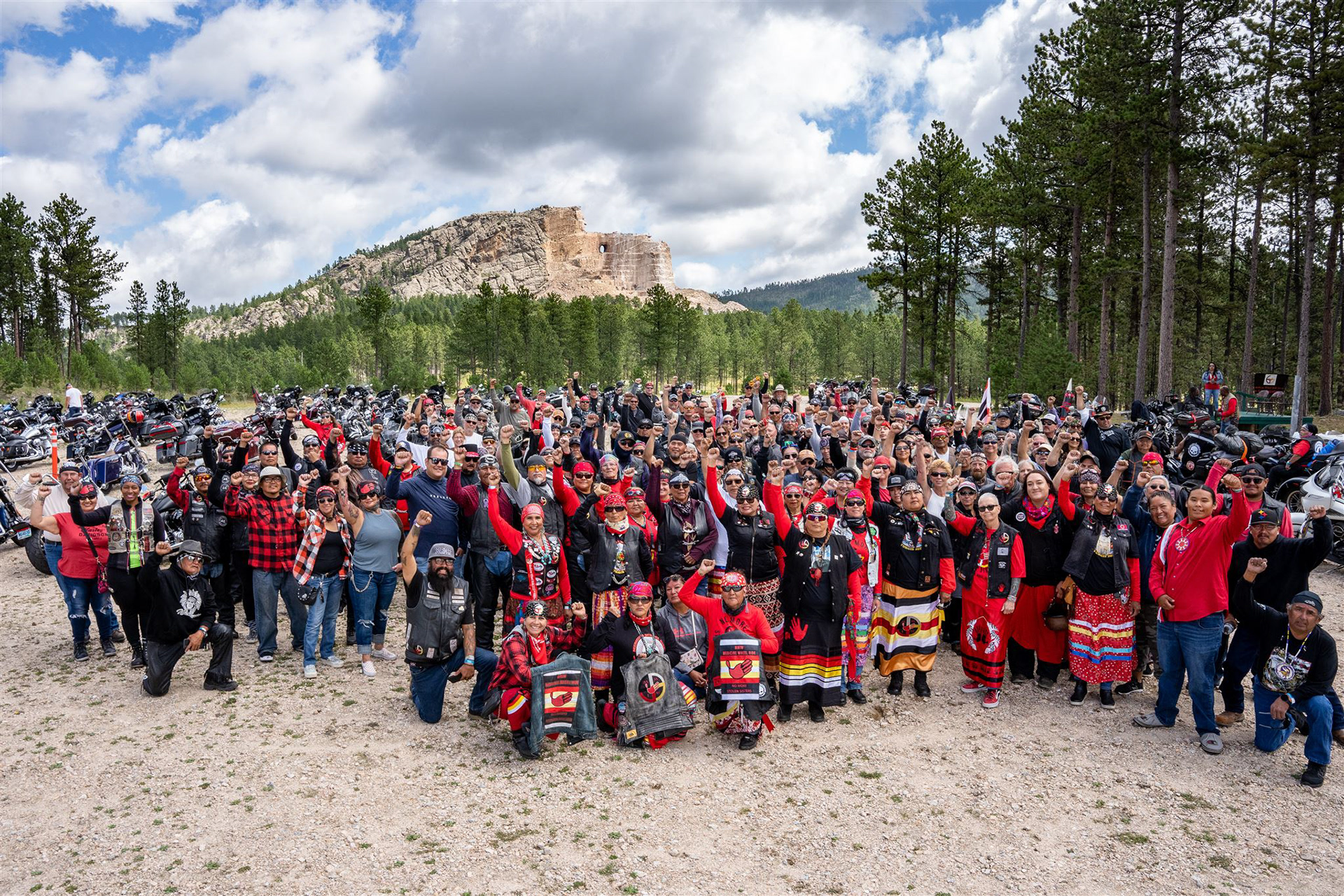
The Medicine Wheel Ride's last destination was right below the face, etched in stone, of Crazy Horse, a courageous Native American warrior. Crazy Horse prevailed against the odds during the Battle of the Hundred in the Hand in 1866 and in the Great Sioux War of 1876-77, fighting against an encroaching government and military that was searching for gold and violating treaties in the Black Hills.
A ceremony was held at Crazy Horse Memorial, and prayers and stories were shared from families of Missing and Murdered Indigenous People. It was a historic moment of remembrance, honor, and unity.
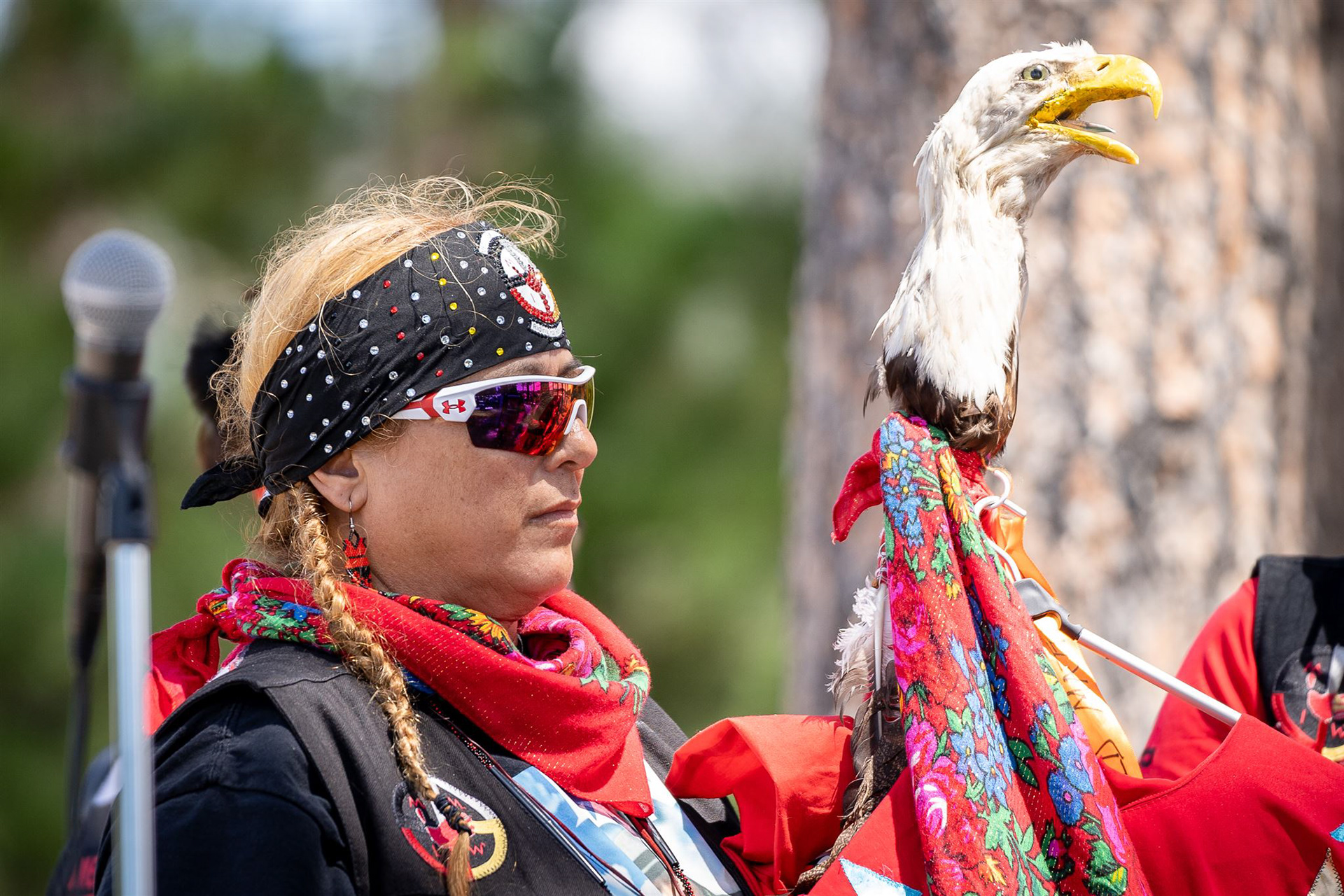
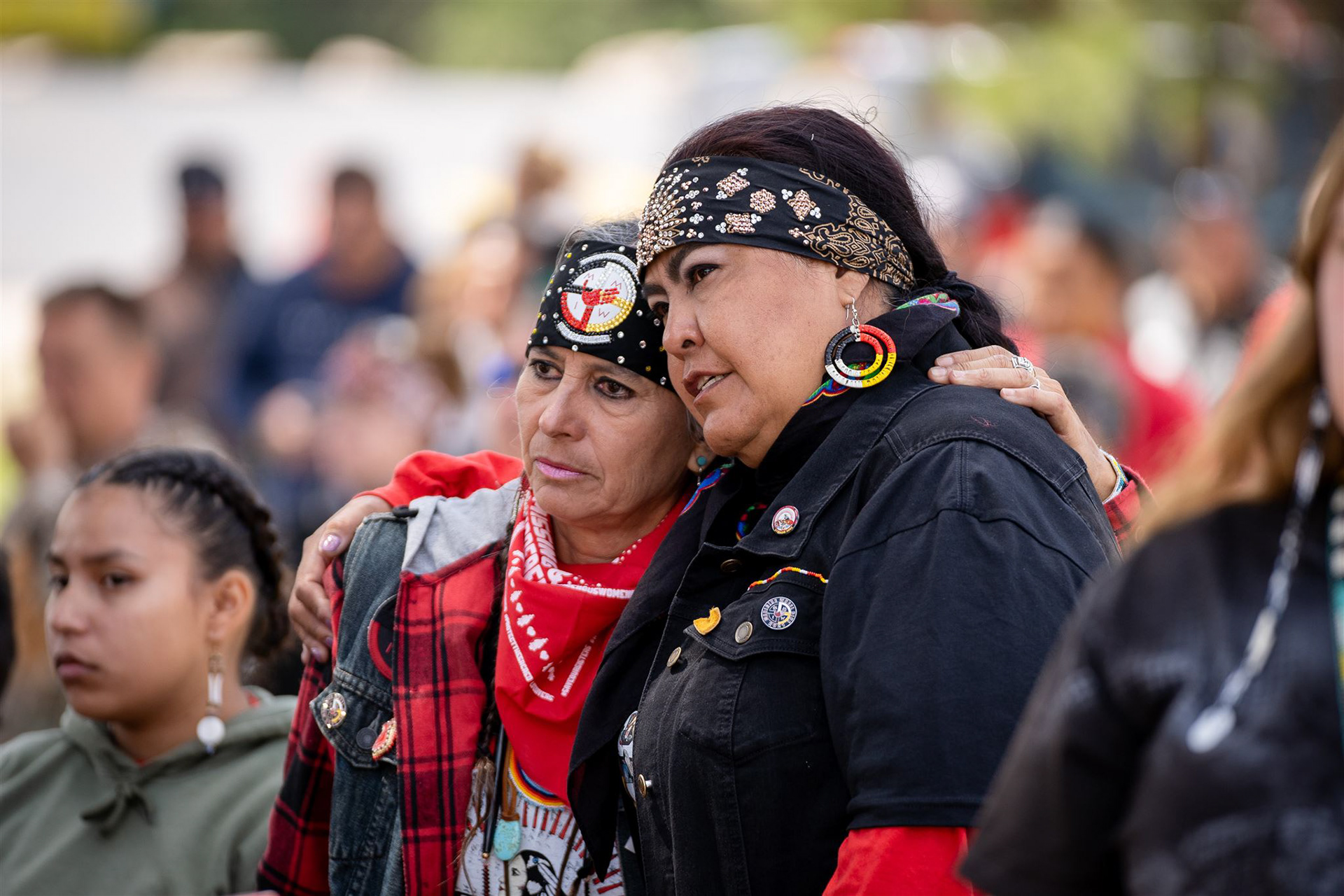
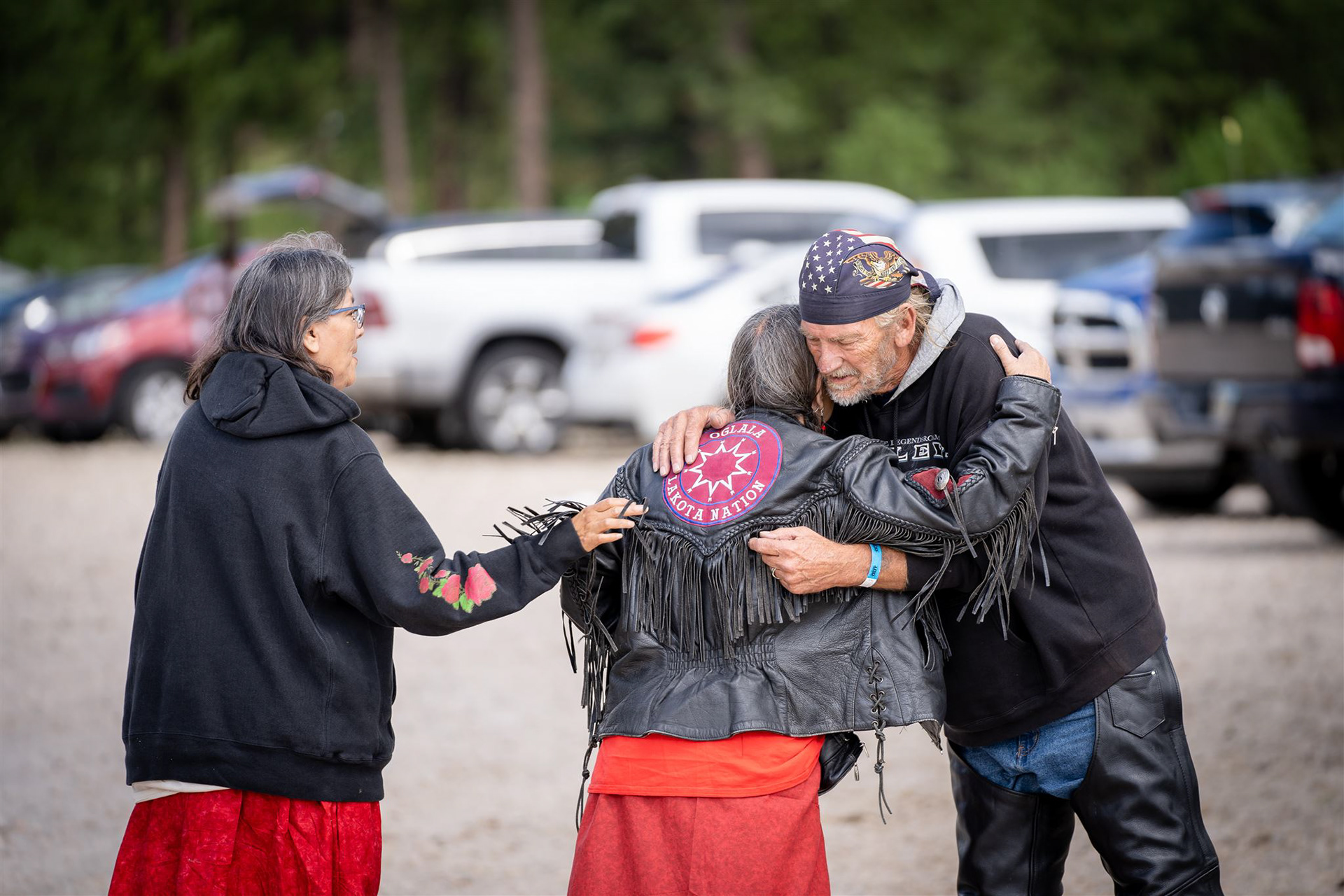
With more people joining Medicine Wheel Ride each year to support Missing and Murdered Indigenous People, the community makes small strides towards justice by raising awareness. Lisa Rivera, "Sacred Ryder," pointed out that every person who learns about this epidemic takes on part of the responsibility of spreading awareness.
May 5th of each year has been officially designated as the National Day of Awareness for Missing and Murdered Native Women and Girls.
Every 3 days in the US and Canada, a Native woman goes missing from her family and community.
Support the Medicine Wheel Riders on Facebook and at www.medicinewheelride.org